




Advertisement
The Hustle
Welcome to Byrdie's series The Hustle. We're profiling diverse, interesting women and woman-aligned folks in the beauty and wellness industries who are usually behind the scenes. From the cosmetic chemists formulating your holy-grail serum to CFOs driving the biggest beauty companies forward, these women are the definition of career goals, and they're getting real about the journeys that led them to where they are—the highs, the lows, and everything in between.
I met Shizu Okusa on a recent trip to Japan to learn about her popular wellness brand, Apothékary. "She rocks," I said to the person sitting next to me after hearing her speak about the way the products reflect her Japanese culture and American lifestyle. And it's true—there's no better way to feel connected to a brand than to listen to the founder discuss its origin story. The need, the cultural roots, and the modern-day updates all just fit.
That said, the journey to success in entrepreneurship is never linear. So, I sat down with Okusa to discuss where's she's been and where she thinks the brand is going. She filled me in on why these products and ingredients mean so much to her, her advice for those breaking into the wellness space, and the legacy she hopes to leave on the industry. I snuck in a few questions about her favorite beauty and wellness products too. You're welcome!
You went from Wall Street, to cold-pressed juices, to Apothékary. After your first venture, how did you come to choose ingestibles? What makes you feel connected to these products?
"Between working on Wall Street and starting my first business, I lived on a farm in Africa for about a year. Then, I lived in Japan for about three months. If I didn't go to Mozambique, and if I didn't live in Japan for even that short period of time, I don't think I would have gotten into entrepreneurship. It was a real blessing to stop before speeding up. I had the opportunity to stop, assess, and reconnect with myself. It was what I call 'resume virtues versus eulogy virtues.'
"I experienced a big death in my family, my uncle, who had a huge presence. I was able to represent the family at his funeral. He was the first entrepreneur in our family. [His funeral] was eye-opening. I began to think, death is so close, and I don't want to live a life without taking big leaps of faith in my own life and career. After that, I went back to the U.S., started Drink, and began the journey of connecting back to my heritage. Cold-pressed juice, though, didn't have any connection to Japan.
"As I was getting into my 30s, I realized stress [had a real hand in aging]. The sleep and digestive problems I was going through [took a toll], and I didn't want to keep popping pills. I went back to the roots of how and where I was raised, and it was never popping pills. It was always through herbs, and nature, and plants. It's a combination of lifestyle, food, and supplementation with herbs. That's where the reconnection happened, and the aha moment. I was like, 'Okay, let's do herbs. And let's bring this to the people.' Apothékary started in January of 2020, and then COVID happened."
Oddly perfect timing.
"It was, it truly was. There was such strong intent from customers searching for remedies and health products. I think this happens a lot with entrepreneurs. It's being ready, but ready for luck. Yeah, we were ready for luck."
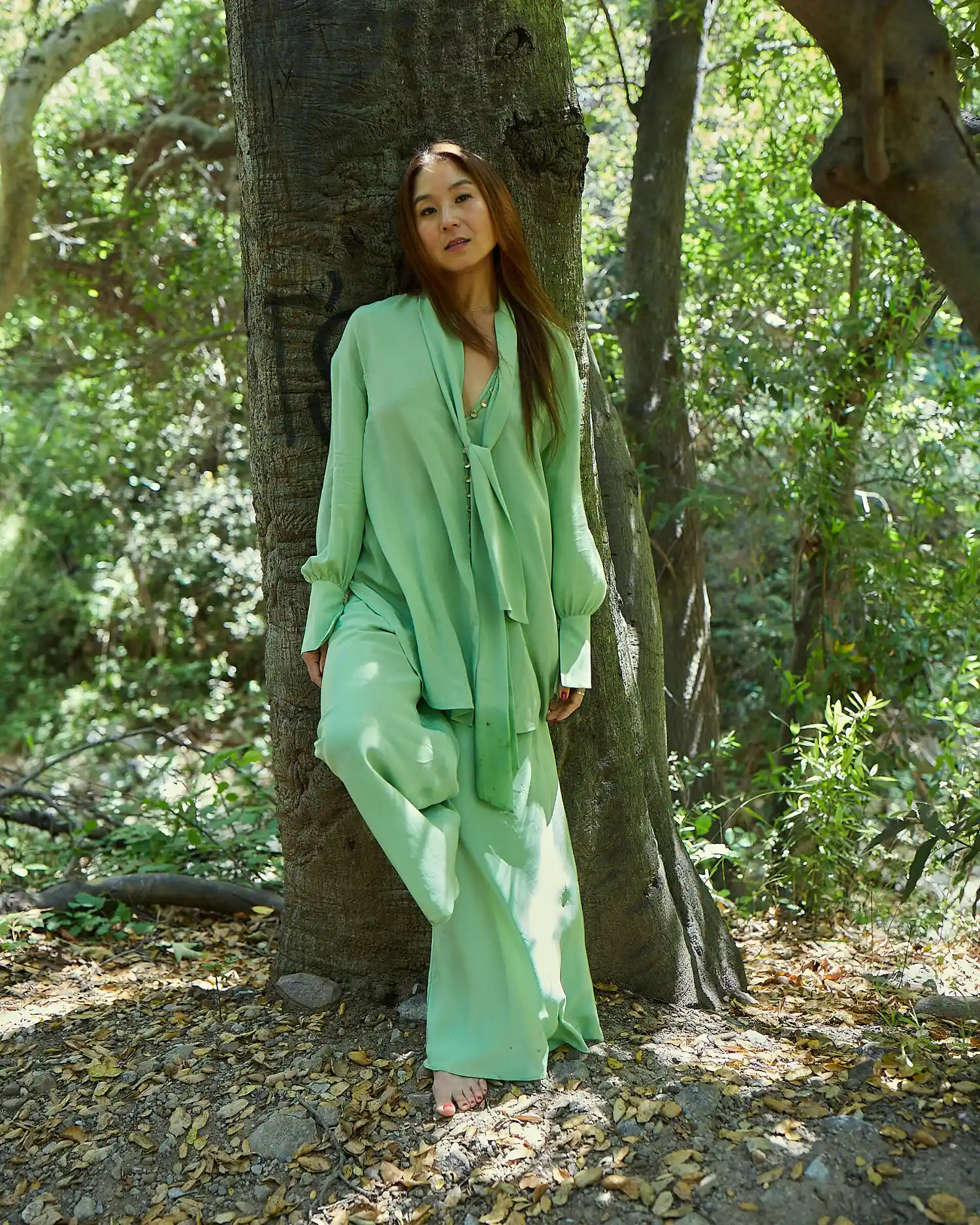
Shizu Okusa
I love that. What would you say is the most challenging part of your job?
"We're in the muddy stage. If I'm using analogies from nature—we're in the mud, we're trying to grow and move in mud, and that's really hard. You see the mountain above the mud but it's so slippery getting there. The company will scale exponentially. But people don't scale exponentially. We get tired. We tap out. If you don't have processes put in place, like impossible to scale the company at the speed of people."
That's really perfectly put. You can come up with all of these strategies and ideas about scale, and the consumer desire is there, but you can't have 27 of you.
"As the company grows beyond 10 people, you start to put in policies like HR, time off, and mental health days. You have to create a culture externally to customers, as well as a culture internally for your team. The hardest part of my job is being a politician."
What's the most rewarding part of your job?
"It's also the people! It's the small stuff; the everyday. I love watching the team grow. I love to be able to give someone a bonus and or promotion and watch them get excited [or feel fulfilled]. Most people think it's all about the money stuff, like hitting revenue goals or a fundraise. But those are never the real milestones. They're the numbers people like to benchmark you on. But it's not where celebration happens."
In regards to the brand and the products, what are you most proud of?
"I'm the most proud from the business side. This year we manifested and attracted so many inbound requests and partnerships. And, of course, the things we went for full force to create our own path. [We took a trip to Japan], and I didn't think we could pull that off."
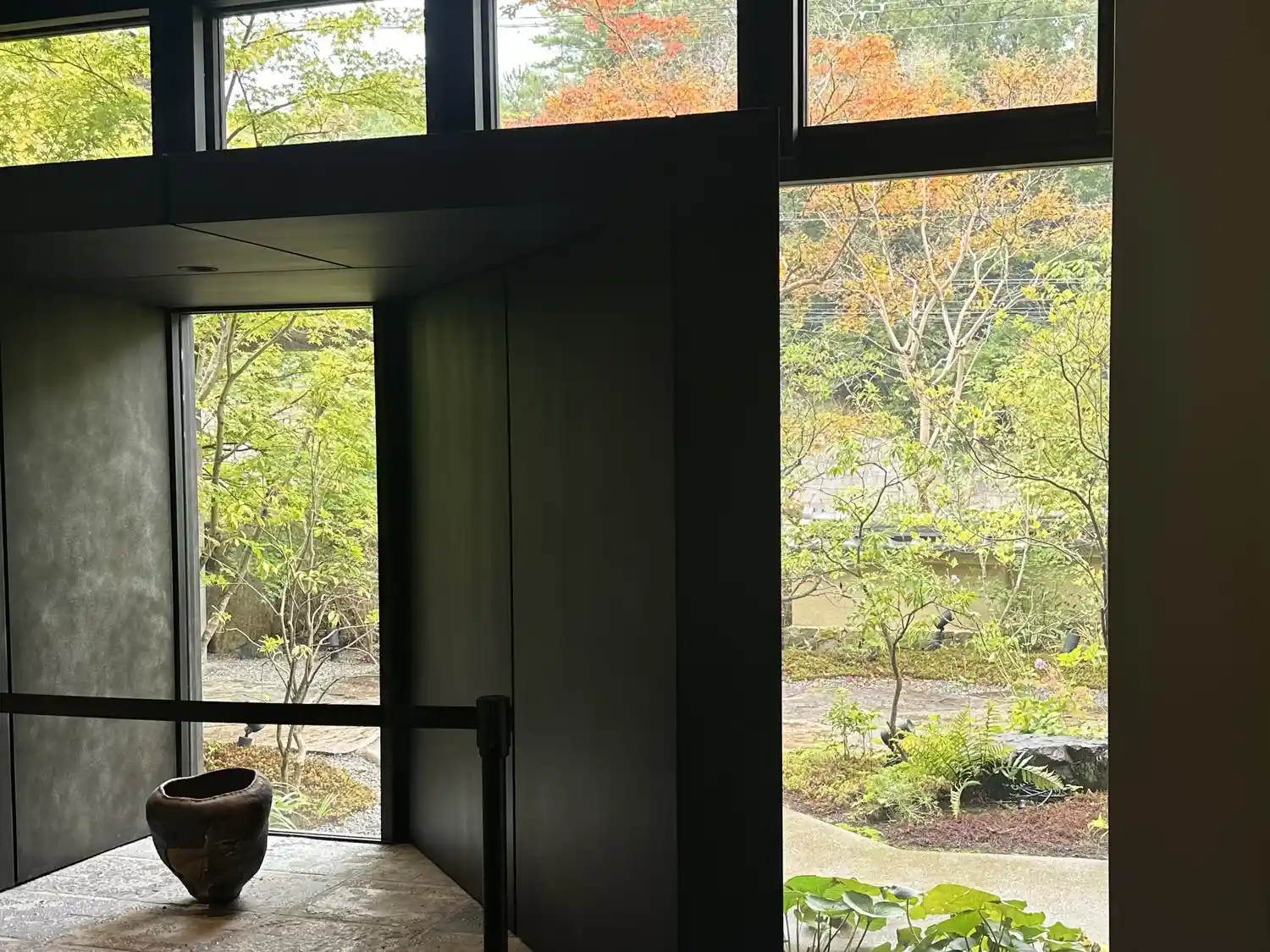
You can really feel the specific connection between the brand and Japanese culture. The trip must have felt like a full circle moment.
"We want to do it again next year, and open it up to customers. We also just filmed a documentary. Being able to do that work, and combining ikigai, which in Japanese means life purpose, was a really proud moment for me. It's the synchronization of life and work together, which makes life that much more sweet." What are your favorite tinctures right now?
"I love Sugar Kick. It's now one of my top favorites. It doesn't have too much sweetness. I love vinegar and anything I can do to have my cake and eat it too."
I've really been loving Wine Down. That's what really wowed me—it's just a couple drops. It's so easy on the consumer, and that feels really genius. Walk me through launching with powders, and then the decision move over to tinctures.
"The most traditional form of herbal medicine is boiling whole herbs and drinking the broth. Many of us don't have time for that, right? So the next iteration is to take that mushroom and grind it down into powder form. Then, you can add that to water and drink it. That said, it doesn't always dissolve well. It can be gritty. So, the experience is not great, right? In the U.S., people want it to be easy and they want it to taste good. I learned that the hard way. The first two years we got a lot of feedback on that."
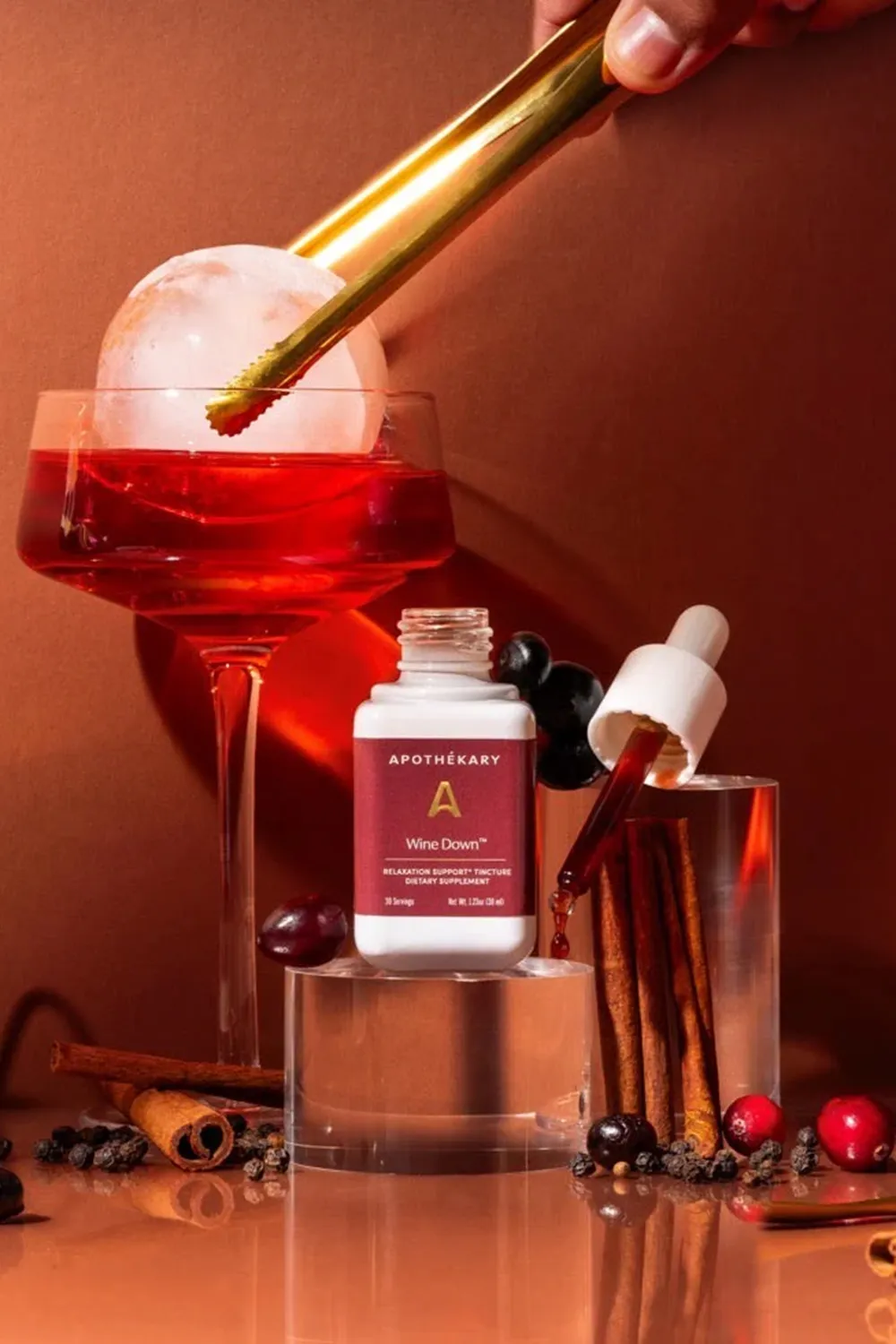
apothekary
Americans are famously finicky.
"Taste really matters. I saw the writing on the wall. We could acquire customers all day, but they weren't going to come back. The move to tinctures was a way to combine taste with efficacy, science, and powerful herbs still intact. We wanted these tinctures to feel more modern [than what had been on the market] and fit better into the beauty and wellness category. That's when the rebrand happened."
Do you have any mentors who helped you get where you are today?
"So, so many. Our investors list is about 100 people long. With every problem, I think, Who can I call? I feel incredibly fortunate that I can pick from so many visionaries based on their specific expertise. It's mentorship from different people, and people who really know me well as a human. That way I can always stay connected to the vision."
Is there a lesson that sticks out as most important to your journey?
"I've moved my home about 12 times now, across the country and back again. It goes to show that you can never really plan perfectly. All the stress and anxiety we put on ourselves around one big decision—and getting it exactly right. But, nope, you have multiple chances. I like to think of life and business as both reversible and irreversible decisions. And if something is reversible, just go for it. I just remember the North Star.
"The lows and the hard times are for returning back to humility. When you're on the rise and you're always winning, winning, winning—you can lose that humbleness. I take this approach now: Stay immune to criticism and stay immune to praise. I'm not going relish in either."
How do you define beauty and wellness for yourself?
"For me, it's inner peace."
Do you have any favorite beauty products of the moment?
"I love Damdam's Matcha Boost Hydrating & Restorative Eye Serum and Westman Atelier's Vital Skin Multi-Use Foundation. It's like butter, it melts into my skin beautifully. I love the overnight sheet masks that stay on your face. And, of course, I love The Honest Youth. I take that every night."
What lasting impact do you hope to have on the beauty and wellness industry? What do you want your legacy to represent?
"I love that question. I hope that our work with Apothékary helps to reconnect people back to nature, because nature exists inside all of us. It's about quieting our minds, going inwards, and reconnecting back toward ourselves. Get off the phone and disconnect to connect. It's about getting grounded."
Do you have any advice or words of encouragement for anyone looking to break into your field?
"Wellness is huge and it will continue to grow as an industry. Everyone is tired, everyone's stressed, and trying to figure out how to feel better. If you're keen to be in the wellness space, like there's no shortage of market opportunity. I would just say, don't go in blindly. There's a lot more competition nowadays. Do your research. There's so many resources that are available. Get scrappy, ask the right questions, get mentors. Just stay hungry and grounded. Be a good human and be respectful."
Advertisement
Advertisement


Advertisement
Advertisement


